A New Era in German Defence Innovation
Germany, long known for its cautious stance on military affairs post-WWII, is undergoing a historic transformation in how it perceives and funds defence technology. A country once restrained by pacifist leanings and complex bureaucracy is now positioning itself at the forefront of AI-driven military innovation.
From AI battle drones to autonomous submarines and cyborg cockroaches, Germany is scaling a new defence ecosystem led by agile startups and a tech-forward government.
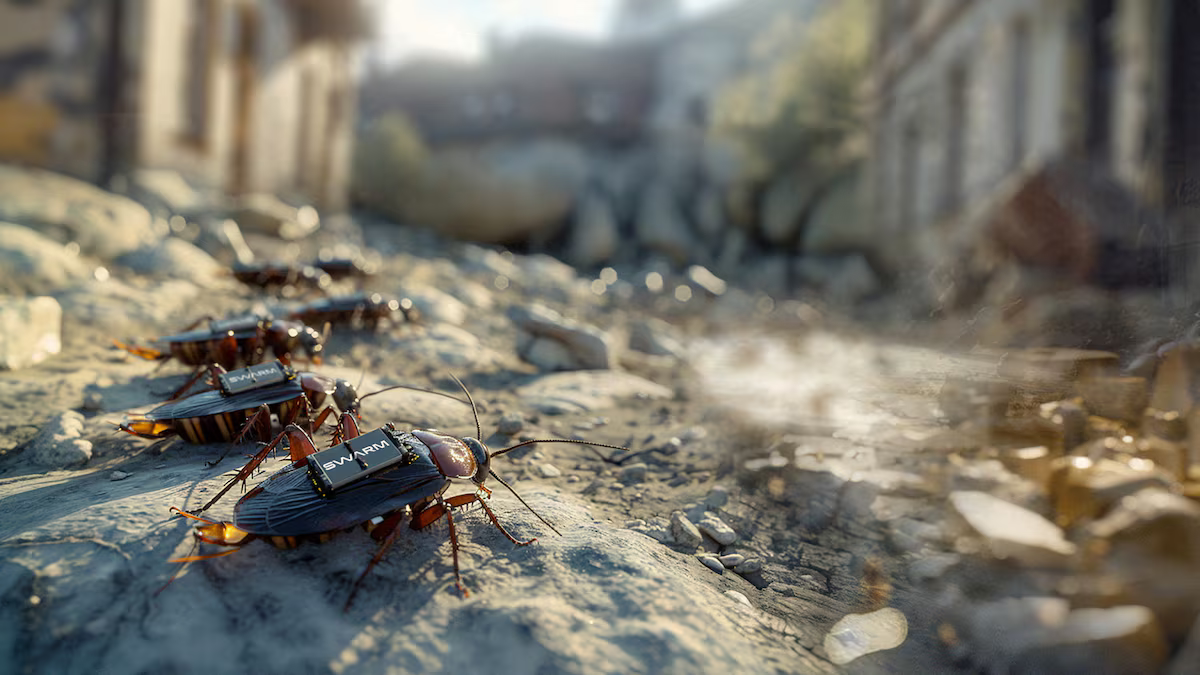
Spy Cockroaches: Sci-Fi Meets the Battlefield
Among the most striking examples of Germany’s innovation push is a project by Swarm Biotactics, a startup developing cyborg cockroaches equipped with AI-enabled backpacks. These live insects carry:
- Cameras
- Neural stimulation systems
- Sensors for real-time surveillance
The goal? Use them for covert reconnaissance, especially in tight or hostile environments — scenarios where traditional tech would struggle to operate.
According to CEO Stefan Wilhelm, these bio-robots can be controlled remotely or act autonomously in swarms, providing battlefield intelligence with minimal risk to human lives.
🇩🇪 Government Support & Strategic Shift
Germany's government, under Chancellor Friedrich Merz, is not just observing these trends — it's actively accelerating them:
- A new procurement law fast-tracks startup participation and permits advance payments, a rarity in defence contracting.
- Defence spending is set to triple by 2029 to €162 billion.
- Berlin aims to achieve 3.5% of GDP defence spend — outpacing many NATO allies.
This shift has also unlocked venture capital. German defence startups like Helsing, ARX Robotics, and Quantum Systems have attracted over $1.4 billion in recent years.
From Risk-Averse to Risk-Ready
Germany's economic model has long favoured stable engineering and incremental growth. But with the war in Ukraine reshaping global security, Berlin is embracing disruptive technologies and a faster innovation lifecycle.
Startups now collaborate directly with defence leaders, challenging long-established defence giants like Rheinmetall and Hensoldt to innovate or be bypassed.
Challenges Ahead
- Fragmentation across Europe: Differing procurement standards among EU nations could limit regional scalability.
- Ethical debates: Using live creatures for surveillance will spark deep bioethics concerns globally.
- Oversight: Rapid defence innovation often risks outpacing regulation.
Conclusion (From My Perspective)
Germany’s defence revolution is not merely about funding or weapons — it’s about rethinking how a nation balances innovation, ethics, and sovereignty in an increasingly unpredictable world. The use of AI-powered bio-robots like cyborg cockroaches is symbolic of this shift: bold, disruptive, and controversial.
From a technological standpoint, it’s a remarkable fusion of biology and machine. But it also raises pressing ethical and humanitarian questions that must be addressed through transparent governance and international norms.
As the line between war and tech blurs, the real test will be whether Germany’s approach enhances global security — or accelerates a new kind of arms race.